White Label vs Private Label on Amazon: Complete Guide
Table of Contents
- What is White Label and how it works
- Differences between White Label and Private Label
- Advantages and disadvantages of White Label
- Advanced strategies for success in White Label
- How to get started with White Label on Amazon step by step
- Essential tools for selling on Amazon
What is White Label and how it works
Detailed White Label process
- Research an existing product that meets market needs.
- Apply limited customization, mainly packaging and labels.
- List and sell the product under your brand on marketplaces like Amazon for a fast start.
Differences between White Label and Private Label
| Aspect | White Label | Private Label |
|---|---|---|
| Customization | Limited (packaging, branding) | Extensive (product modifications) |
| Upfront costs | Lower | Higher |
| Time to launch | Fast | Longer |
| Margins | Moderate | Potentially higher |
| Exclusivity | Minimal | High (unique product) |
| Quality control | Less | Comprehensive |
Advantages and disadvantages of White Label
Main advantages
- Extremely fast time to market.
- Low initial investment, reducing financial risk.
- Ability to rapidly test multiple products and identify profitable niches.
Potential disadvantages
- High competition due to lack of exclusivity.
- Limited ability to differentiate from competitors.
- Greater vulnerability to supplier quality and availability changes.
Advanced strategies for success in White Label
- Use deep market analysis to find product niches with high demand and moderate competition. SellerMagnet’s sourcing tool helps you identify profitable products, monitor competitors, and analyze profit margins for FBM or FBA.
- Invest in distinctive marketing and branding to increase perceived value.
- Implement effective inventory management and a dynamic pricing system to optimize margins and sales performance.
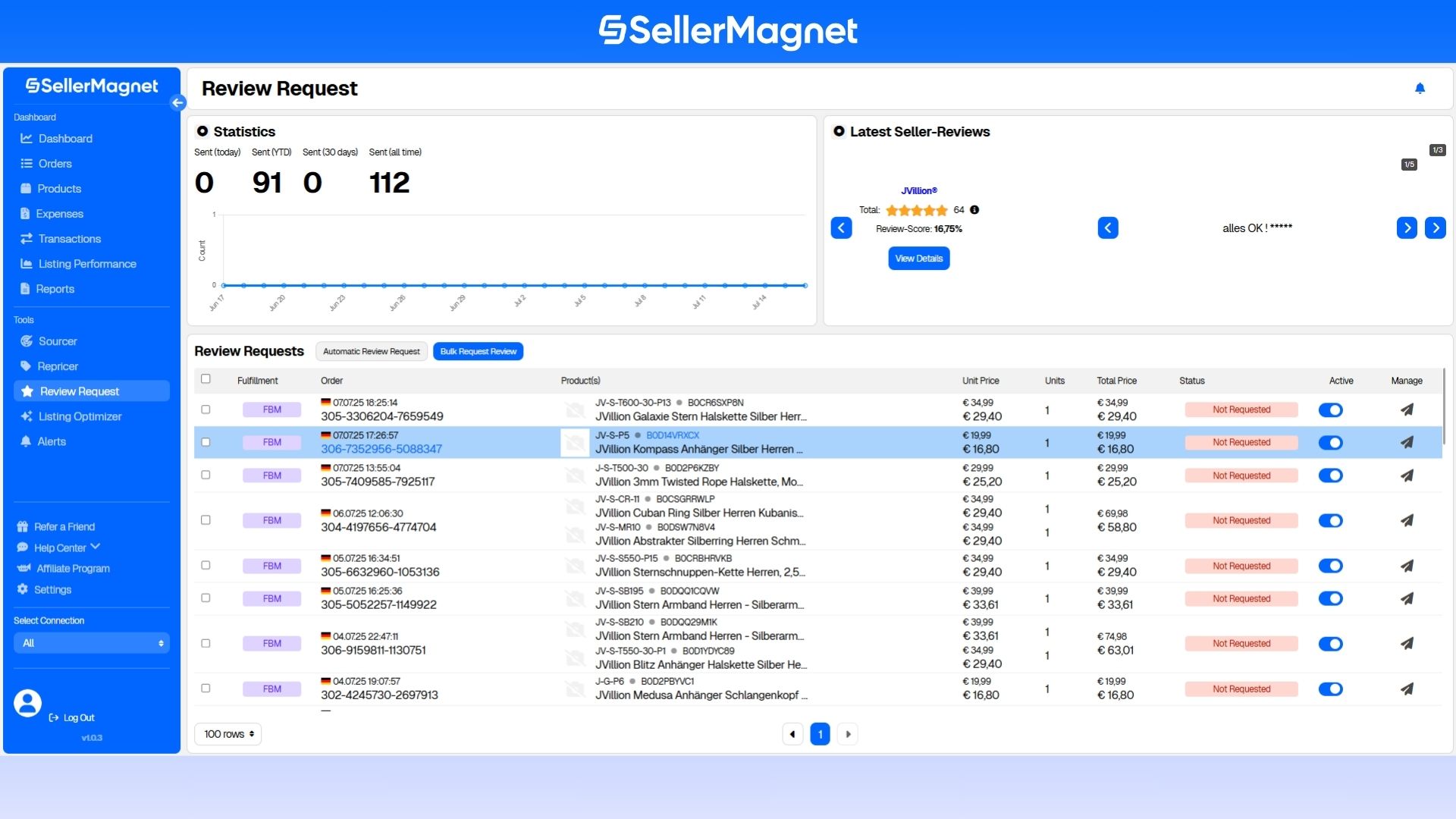
- Deploy an automated review request system to rapidly build your reputation (automate Amazon review requests with SellerMagnet).
How to get started with White Label on Amazon step by step
- Identify profitable niches through thorough market analysis.
- Select reliable suppliers and conduct quality checks.
- Customize packaging and labels to enhance product appeal.
- Optimize your listings using advanced tools like the SellerMagnet Analytics Dashboard.
- Launch targeted campaigns to boost visibility and sales from day one.
Essential tools for selling on Amazon
- SellerMagnet Review Requester: Quickly boost your reputation by automating review collection.
- SellerMagnet Analytics Dashboard: Provides detailed performance and inventory analytics across marketplaces.
- SellerMagnet Repricer: Automatically optimize prices based on competition strategy or stock management to maximize sales and margins.
Why choose SellerMagnet?
Stop Juggling Tools. SellerMagnet Combines Everything You Need.
Join a smarter way to manage your Amazon store.

Recommended Articles

Amazon Brand Registry 2026: Requirements and Cost
Amazon Brand Registry requirements, real trademark cost in USD and EUR, the enrollment steps, what changes once you are in, and a worked example of the payback.
Alibaba Suppliers: Factory or Trading Company? A Pre-Deposit Checklist
How to tell an Alibaba factory from a trading company before you pay a deposit: 6 signals, a 5-step video-call checklist, and what a wrong guess actually costs.
Stranded Inventory on Amazon: Why It Happens and How to Fix It Fast
Amazon's own help pages on what strands FBA inventory, the 48-hour fix window, the 30-day unsellable deadline, and a worked cost example at 2, 7 and 30 days.
No Featured Offers Available: Why and How to Fix It
Why a listing shows "no featured offers available" in 2026, the real causes now that Amazon removed the seller-eligibility gate, and the exact fix for each one.
Amazon High Pricing Error: Why Listings Deactivate
Why Amazon deactivates a listing with a "Potential high pricing error," exactly what triggers it in 2026, and how to set Minimum/Maximum Price so it stops happening.
AWD vs FBA in 2026: Real Costs and When AWD Actually Pays
Amazon's 2026 AWD and FBA storage rates compared line by line, the Smart Storage and Amazon Managed discount rules, and a worked four month example showing exactly when AWD saves money and when it does not.