Improve Conversion on Amazon: The Seller’s Playbook
Table of Contents
- What “conversion on Amazon” really means
- Diagnose where shoppers drop off
- Fix the listing: titles, images, bullets & a-plus
- Pricing, availability & social proof
- Measure, learn, and iterate with analytics
- Quick implementation roadmap (14 days)
1) What “conversion on Amazon” really means
2) Diagnose where shoppers drop off
- Traffic → Sessions: Are you getting enough qualified visits? If not, keyword intent or ad targeting may be off.
- Sessions → Orders: Many visits but few orders indicate listing friction (images, bullets, objections, price, shipping, reviews).
- Buy Box & Stock: Lost Buy Box or frequent stockouts break conversion even with a great page.
- Map top keywords and intents.
- Compare hero image vs. top competitors.
- Scan bullets for benefits, not features only.
- Check coupon/discount visibility.
- Verify Buy Box %, inventory cover, and delivery speed.
3) Fix the listing: titles, images, bullets & A+
Titles that match search intent
- Lead with the primary keyword + core benefit.
- Add differentiators (size, material, pack count) near the end.
- Keep it scannable: useful separators (– | ,) beat keyword stuffing.
Images that sell the story
- Main image: crisp, high-resolution, no clutter.
- Secondary set: lifestyle + infographic images that remove doubts (dimensions, what’s included, how it works).
- Add one image addressing the #1 objection (fit, compatibility, installation).

Bullets and description that convert
- Lead each bullet with a clear benefit, follow with the proof.
- Cover use cases, compatibility, and care instructions.
- Answer pre-purchase questions to reduce returns and negative reviews.
A+ Content that reduces friction
- Keyword stuffing in titles/bullets.
- Overpromising claims or unsubstantiated rankings.
- Tiny text in image infographics.
- Neglecting mobile layouts (most shoppers land on mobile PDPs).
4) Pricing, availability & social proof
Price & availability
- Price to win the click and the cart: test price bands around psychological thresholds ($19.99 vs. $21.49).
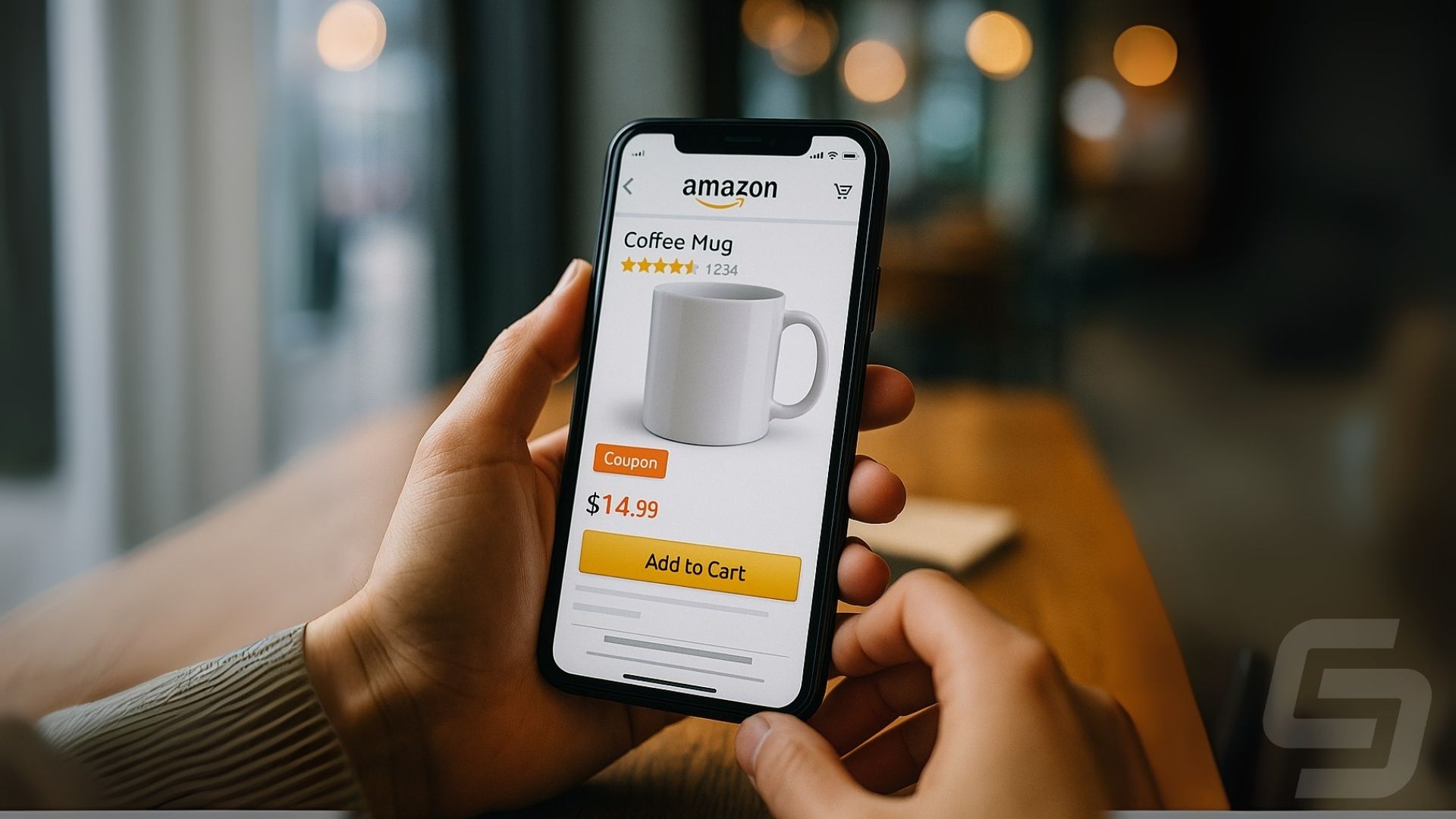
- Coupons & badges: make savings visible; small coupons often lift CVR more than equivalent permanent price drops.
- Fast delivery: FBA or reliable FBM SLAs reduce risk perception and increase add-to-cart.
Ratings & reviews
- Aim for a strong rating trend and frequent, fresh reviews. Respond to Q&A to remove purchase doubts.
- Use compliant automations to request reviews quickly after delivery so sentiment reflects real experience.
Comparison table: which lever to pull first?
| Conversion lever | When to prioritize | Expected impact | Effort |
|---|---|---|---|
| Hero image refresh | Low CTR or weak first impression vs competitors | High | Low–Medium |
| Title rewrite | Irrelevant clicks, poor relevancy | Medium–High | Low |
| Add video | Complex product, setup how-to | Medium | Medium |
| A+ Content | Brand ownership, multiple variants | Medium | Medium |
| Coupon/test price | Price-sensitive niche, close competitors | Medium–High | Low |
| Review velocity | New launches, <4.2★ rating | High (long-term) | Medium |
5) Measure, learn, and iterate with analytics
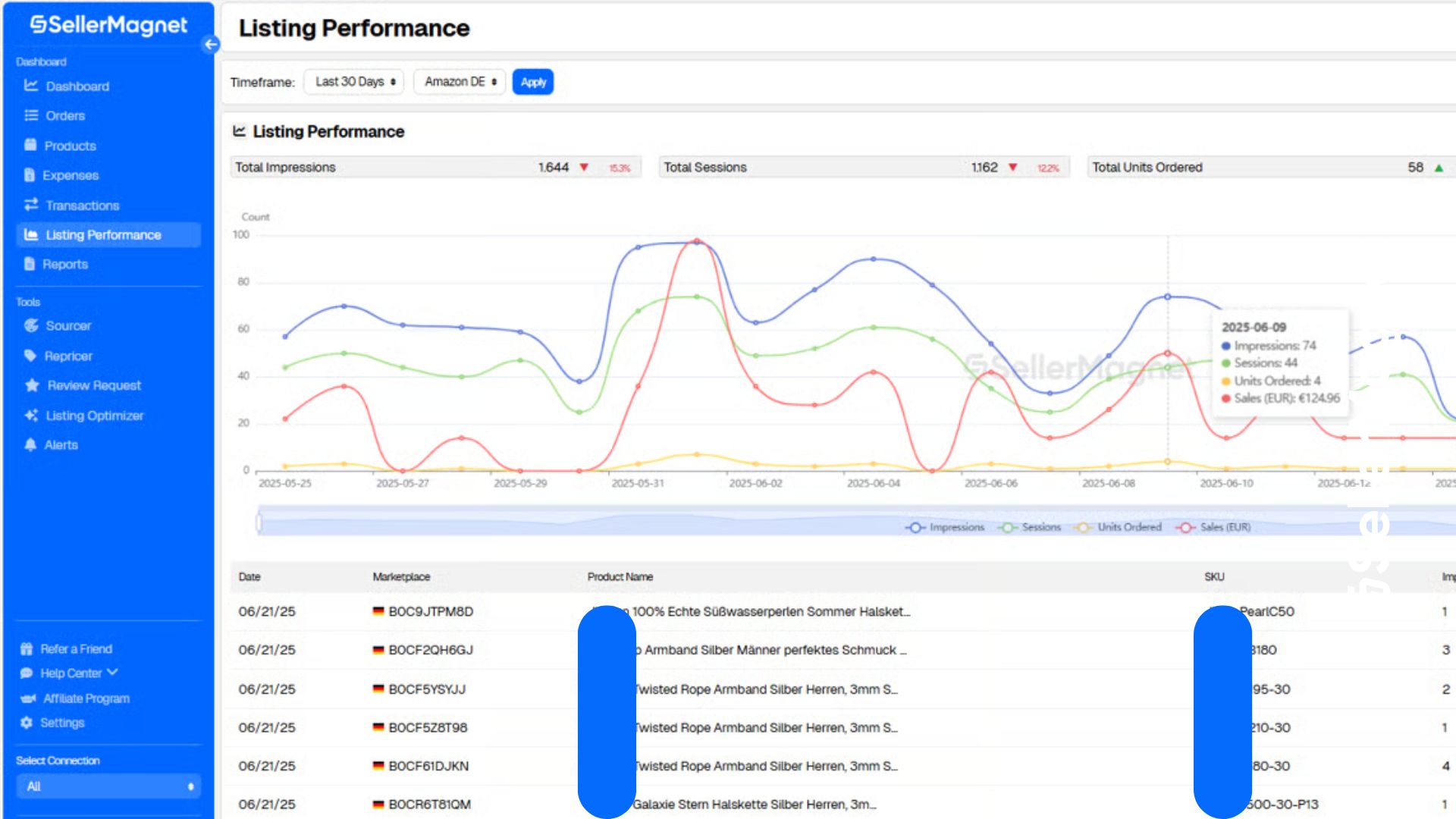
- Detailed metrics overview: Impressions, Sessions, Units Ordered, Revenue—at a glance for fast decisions.
- Graphical analysis: Spot trends and seasonality; isolate lifts after a price or image change.
- Granular product-level data: Break down by marketplace, product, ASIN, SKU, impressions, sessions, units, revenue to identify what to fix—or scale.
- Select last 7/30/90 days and one or more marketplaces.
- Apply filters; hover charts for day-level spikes.
- Drill into ASINs with high Sessions but lower CVR to prioritize creative changes, reviews, or pricing tests.
- Visibility optimization: Find listings with high impressions but low sessions—improve titles/hero images and re-test.
- Regional focus: Double down where CVR is strongest; re-price where it lags.
- Forecasting & inventory: Use unit trends to stock adequately so CVR isn’t throttled by stockouts.
6) Quick implementation roadmap (14 days)
Days 1–2: Audit
- Pull Sessions, CVR, Buy Box %, price bands.
- Screenshot first 7 image tiles vs. top competitors.
Days 3–6: Rebuild the PDP
- Rewrite title with Amazon Title Checker validation.
- Refresh hero + 3–5 lifestyle/infographic images; add a short explainer video.
- Update bullets/descriptions with benefits + proof.
- If eligible, publish A+; register via Amazon Brand Registry if not done.
Days 7–9: Price & promo
- Test a coupon or small price adjustment.
- Ensure inventory coverage and delivery promise.
Days 10–14: Measure & iterate
- Track shifts in Sessions → Orders in Analytics Dashboard.
- Keep what moved the needle; queue the next test.
Final CTA
Stop Juggling Tools. SellerMagnet Combines Everything You Need.
Join a smarter way to manage your Amazon store.

Recommended Articles
Supply Chain by Amazon: Three Dates Decide Your Q4
Supply Chain by Amazon bundles nine services, but only one of them changes what Q4 costs. AWD carries three deadlines inside the next three weeks.
Eleven A-to-z Claims Amazon Grants Without Investigating
Amazon’s own page lists eleven situations where an A-to-z claim is granted automatically, and after 30 days the ODR damage cannot be reversed.

Pan-European FBA Now Needs a Netherlands Offer
Since 3 September 2026 every Pan-European FBA product needs an active Netherlands offer, and Belgium follows in February 2027. Neither can hold your placement minimum.
Selling on Amazon Haul Means Giving Up Your Brand Name
Amazon Haul is invite-only, capped at $20, and every product must be listed under the brand name Generic. What that actually means for a catalogue.
Amazon A/B Testing: The 1,000-View Rule Is Not Amazon's
Sellers argue about a 1,000-page-view threshold for Manage Your Experiments. Amazon's own pages never mention it, and measure something else entirely.
Amazon SIPP in 2026: The $1.32 Discount Is Gone
From 15 January 2026 Amazon deprecates the bulky SIPP discount and charges $1.51 to $4.04 to package non-enrolled bulky units. Amazon's own examples show who pays more.