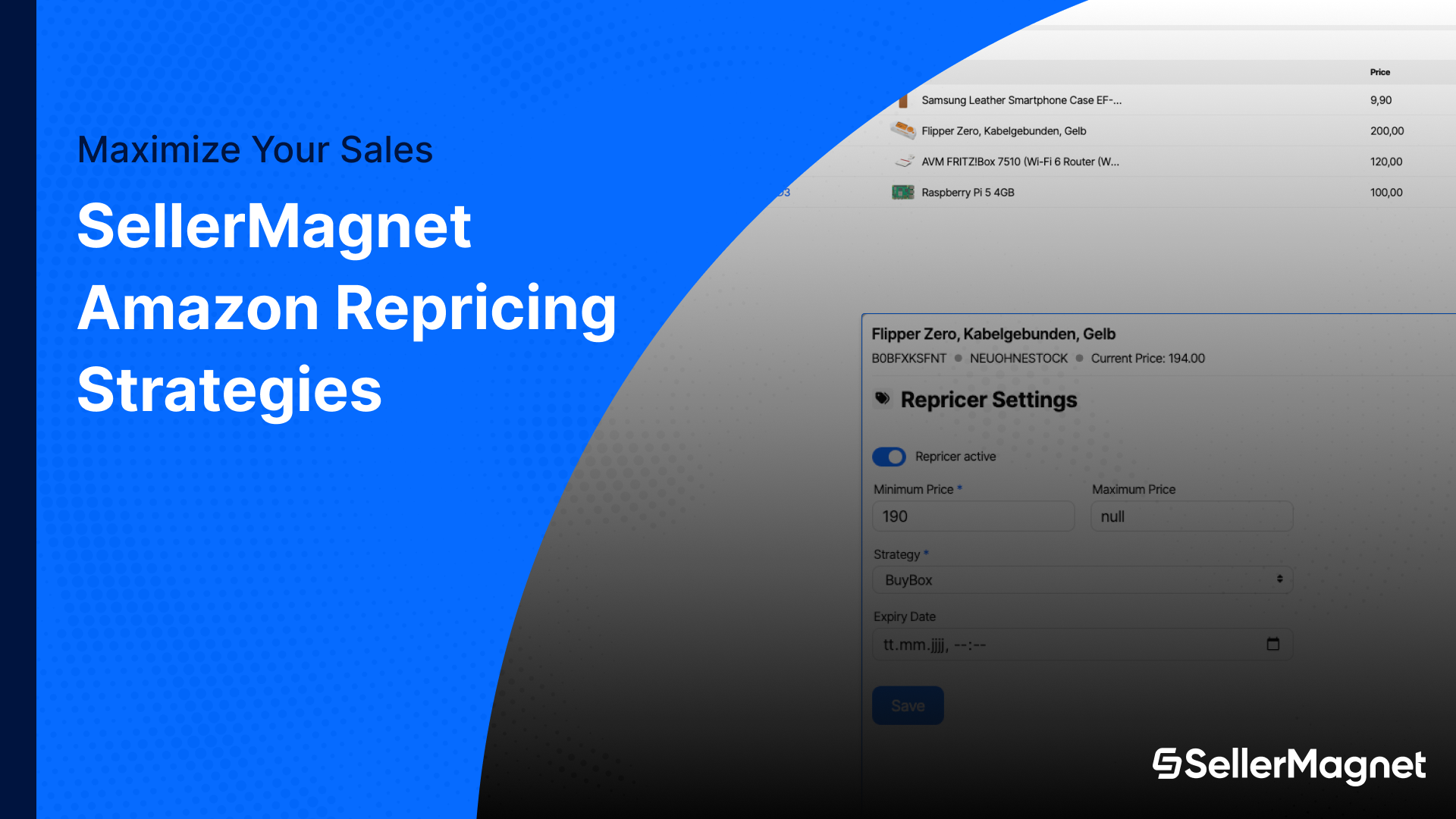
SellerMagnet Repricing Strategies: Maximize Your Sales Potential
What is Repricing and Why Is It Important?
SellerMagnet Repricer: Automating Your Pricing Made Easy
Overview of Different Repricing Strategies
- Minimum Price Repricing: In this strategy, you set a minimum price that your repricer will never go below. This ensures that your profit margins are protected while remaining competitive.
- Maximum Price Repricing: When competition decreases or demand increases, the repricer automatically raises your prices to maximize your margins without deterring customers.
- Price Matching: This strategy adjusts your prices to match the lowest offers on the market. It helps you compete for the Buy Box without necessarily being the lowest-priced seller.
- Undercutting Competitors: The repricer sets your price slightly below the lowest competitor. This is an aggressive strategy to gain market share but should be used carefully to avoid eroding profit margins.
- Dynamic Repricing: This advanced strategy adjusts your prices automatically based on market conditions and demand. You can set rules that allow the repricer to adjust prices depending on time of day, demand, or stock levels.
How to Choose the Right Repricing Strategy
- If your goal is to win the Buy Box, price matching or undercutting competitors are great choices. These strategies increase your chances of being the preferred seller.
- If protecting your profit margins is important, minimum price repricing ensures your prices never drop too low, helping you avoid potential losses.
- If you face little competition and want to maximize margins, maximum price repricing is ideal. You can increase prices in a relaxed competitive environment without fear of losing customers.
- For long-term success, dynamic repricing is a perfect choice. This strategy adapts prices based on demand, time of day, or stock levels to optimize your pricing over time.
Why SellerMagnet Is the Best Repricer for Amazon Sellers
- Around-the-clock Adjustments: SellerMagnet Repricer runs around the clock and re-evaluates your prices roughly every 5 minutes, so you stay competitive without constant manual checks.
- Full Control: You have complete control over your pricing strategy, with the ability to set price limits and create custom rules for your pricing.
- User-friendly Dashboard: The intuitive dashboard gives you an overview of your pricing strategy, and you can easily make adjustments when needed.
- Increased Buy Box Chances: By combining different repricing strategies, SellerMagnet boosts your chances of winning the Buy Box and increasing your sales.
Conclusion: Succeed with the Right Repricing Strategy
Stop Juggling Tools. SellerMagnet Combines Everything You Need.
Join a smarter way to manage your Amazon store.

Recommended Articles
Amazon Buy Shipping 2026: Rates and Limits Guide
How Amazon Buy Shipping's discounted carrier rates work, the real zone-based rate card, a worked monthly savings example, and when linking your own carrier account beats it.
Amazon Pricing Health 2026: Deactivated and Within-5% Flags
What Amazon's Pricing Health tool actually shows: deactivated offers, Featured Offer disqualifications, the within-5% flag, the 7 reference prices behind it, and the new Seller Assistant dispute path.
Amazon Multichannel Selling Tools 2026: eBay, Shopify, TikTok, Walmart in One Place
Amazon's new multichannel selling tools connect eBay, Shopify, TikTok and Walmart to Seller Central. What's live today, a worked example, and the limits.
Amazon Rank Change Alerts 2026 Guide
Why Best Sellers Rank lags a real problem by up to 12 hours, the events that actually move it, and how to catch a Buy Box or rank change the hour it happens instead of days later.
Amazon RRP and Was Price 2026: How the UK Store Validates Your Reference Prices
How Amazon validates an RRP and calculates the Was Price in 2026, the 18 May rule change that can pull promotional sales into the median, and a worked 90-day recalculation.
Amazon FBA Removal, Disposal and Liquidation Fees 2026
The 2026 Amazon FBA removal, disposal and liquidation fee tables, how a liquidation payout is actually calculated, and a worked cost comparison on the same batch of inventory.